Launching a Shopify store is just the first step in building a successful online business. Your goal is to turn visitors into paying customers. For that, you need a trustworthy website, compelling product pages, and a seamless shopping experience. With the right Shopify discount app, you can do all of these and also run targeted promotions. This is a guide where we explore 10 practical strategies to increase conversions. We will also take a look at the best Shopify apps to help your store grow.
Why a Shopify Store Is Not Getting Sales
When you have enough visitors but no one is buying anything, it means that something is going wrong somewhere in the customer journey. You can understand this cause and directly rectify it so that you do not have to spend any unnecessary money.
Some of the common reasons are as follows:
- Low website traffic: Only a small number of potential customers discover your product. Discovery is limited to search engines and other advertising.
- Weak product pages: The product pages are not compelling enough. It can be unclear descriptions, missing product details, or poor-quality images.
- Lack of trust: Unclear return policies, missing reviews, and limited contact information can all discourage first-time buyers.
- Complicated checkout: Limited payment options, or too many steps in the checkout.
- Unexpected costs: High shipping charges, or hidden costs appearing at the last minute.
- Poor promotions: Unclear offers, or irrelevant discounts.
How to Increase Sales on Shopify Store
Let us look at some of the most effective ways that you can use to turn more visitors into customers.
1. Define Your Unique Value Proposition
Your Unique Value Proposition (UVP) communicates why the customer should choose your product rather than the competitor’s.
First, you have to identify what makes your business different. It can be personalized service, product quality, sustainable materials, competitive pricing, or a specialized product range.
Display your UVP on the homepage. For example:
- “Lightweight waterproof backpacks”
- “High-quality products”
2. Showcase Customer Reviews and Testimonials
Most shoppers look for feedback and reviews before buying a product.
Reviews help buyers to know more about product quality, durability, fit, and real-world performance. The goal should be to display genuine customer reviews near product descriptions.
To collect more reviews, you can send follow-up emails after delivery or ask customers to share honest feedback. Expecting negative reviews and professionally responding to them is necessary too.
3. Offer Free Shipping
Shipping costs are identified as one of the major reasons for cart abandonment. They can discourage customers from completing the purchase at the last moment.
If it is not possible to offer free shipping on every order, consider introducing a minimum order threshold.
4. Add Trust Signals to Your Shopify Store
Customers need confidence and confirmation that their orders will arrive and their payment information is safe. You can build trust by displaying trust signals like:
- Clear shipping, refund, and return policies
- Accurate contact details
- Product guarantees, if applicable
- Secure checkout information
- Recognized payment options
- Genuine customer reviews and testimonials
However, avoid cluttering the website with a lot of unnecessary badges. The focus should be on information that answers genuine customer concerns.
5. Improve Website Navigation
No shopper wants to click through so many confusing pages to find a product.
Create a clear navigation menu and organize products into logical collections. Search functionality and filters can be added for necessary attributes. A few relevant ones are size, product type, color, and price.
Create collections like “New Arrivals”, “Best Sellers”, and “Gifts under $30”.
Website navigation on mobile devices should be fixed too. Test and confirm that all the menus, filters, and buttons work on smaller screens.
6. Speed Up the Checkout Process
A complicated checkout can quickly turn a potential purchase into lost revenue. As a merchant, always make it your goal to simplify the checkout process by reducing all unnecessary steps.
Eliminate all the irrelevant form fields, offer guest checkout where it is possible, do not hide any shipping costs in the initial stages, and enable all possible payment methods.
Make sure there are no broken links, confusing instructions, or unexpected charges.
7. Offer Discounts and Promotions
Promotions placed strategically can encourage first-time purchases and increase order values. They have the potential to bring back old customers too. However, these promotions should always support your business goal.
A few promotional ideas to consider are here:
- Limited-time seasonal offers
- First-order discounts for new customers
- Minimum-spend offers to encourage larger orders
- Percentage discounts on selected products
- Exclusive codes for customer segments or marketing campaigns
NexDiscount helps Shopify merchants create more controlled promotions. This includes percentage discounts with rules for eligible products and maximum dollar caps.
For example, a 20% discount capped at $25 allows the customer to receive the advertised percentage. At the same time, the maximum discount eligibility per order is limited. When you are running promotions on higher-value carts, this can come in particularly useful.
8. Accept Multiple Payment Methods
The payment preferences of customers can be broad. Limiting their choices can create unforeseen friction for them at the checkout.
Depending on your market and eligibility, consider offering credit and debit cards, digital wallets, and accelerated checkout options. Also look out for any relevant local payment methods.
Merchants can offer suitable options with Shopify Payments and other supported third-party payment providers.
9. Set Up Instant Customer Support Replies
Customer support should be made easy through live chat, a contact page, or a resourceful FAQ section. Automated replies can instantly acknowledge inquiries and direct customers to relevant information. Customers can find information even after office hours.
When a shopper cannot find information about delivery times, sizing, or returns, they might hesitate to buy the product.
Shopify Inbox is an option to manage customer conversations.
10. Optimize Product Pages for SEO
Search engine optimization is critical to help the customer discover your product when they search for relevant items. You can start with keyword research to understand what your target audience is looking for. Then optimize each product page with the following:
- Descriptive title tags and meta descriptions
- Clear product names
- Benefit-focused descriptions
- Relevant keywords naturally in headings and body content
- Descriptive image alt text
- High-quality images
- Helpful product specifications, FAQs, and internal links
- Useful information that supports purchasing decisions
What to avoid:
- Copying descriptions from manufacturers
- Repeating keywords unnaturally
SEO becomes successful eventually. Therefore, combine organic search improvements with other relevant traffic sources, and monitor the results in the meantime.
The most effective way to get more sales on Shopify is to address the biggest obstacles first. Keep measuring the impact of each change, and use that to improve the store.
Quick Comparison: Which Strategy Should You Prioritize?
| Strategy | Main benefit | What to measure |
|---|---|---|
| Unique value proposition | Clearer differentiation | Product-page conversion rate |
| Free shipping | Less cost-related friction | Average order value |
| Reviews and trust signals | Greater buying confidence | Conversion rate |
| Faster checkout | Fewer checkout obstacles | Checkout completion rate |
| Better navigation | Easy product discovery | Product views, engagement |
| Multiple payments | Convenient checkout | Payment completion rate |
| Targeted discounts | More relevant promotions | Profit per order |
| Instant support | Quicker answers | Support-assisted conversions |
| Product SEO | High relevant organic traffic | Search clicks, organic sales |
Best Shopify Apps To Increase Sales
The best Shopify apps to increase sales depend on the biggest challenges that your store is currently facing. There is no need to install all the apps out there. Instead, start with tools that address a clear need for you.
NexDiscount
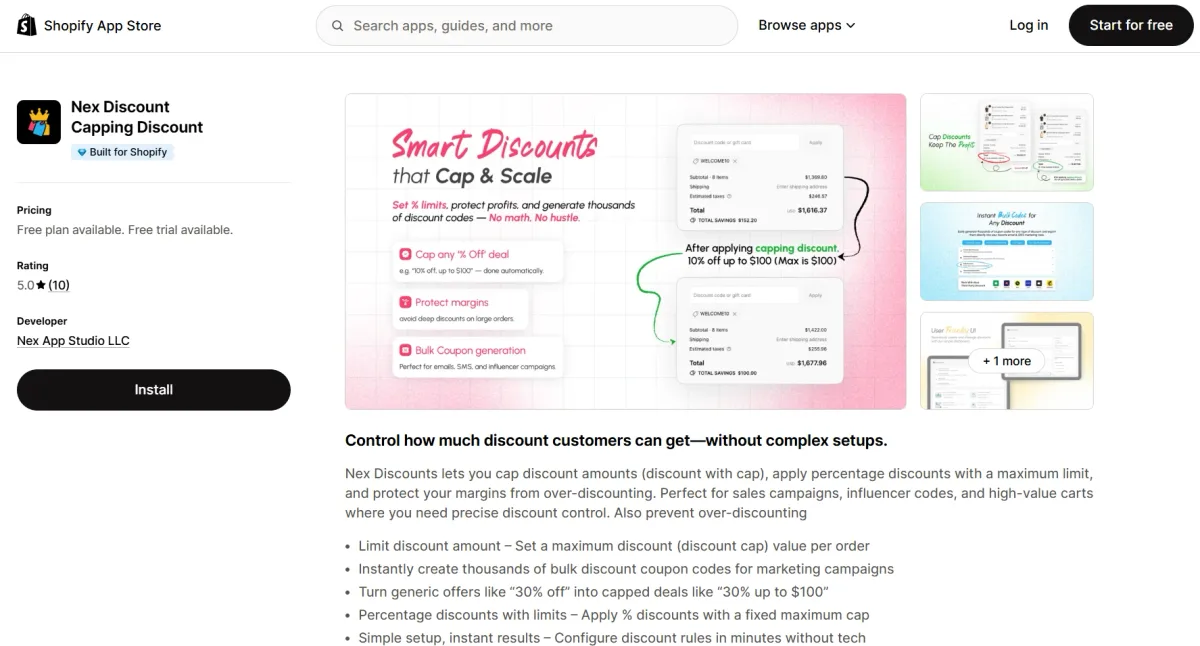
NexDiscount is commonly used for smarter discount management. It helps merchants create controlled discount campaigns. This can be done using percentage or fixed-amount discounts, eligibility rules, maximum discount caps, and product and order targeting.
If you are looking to promote products without letting discounts grow beyond a particular amount in larger orders, this is your go-to app.
It is best for stores that run seasonal promotions, margin-conscious discount campaigns, and targeted offers.
Explore NexDiscount to learn more about its features.
Shopify Inbox
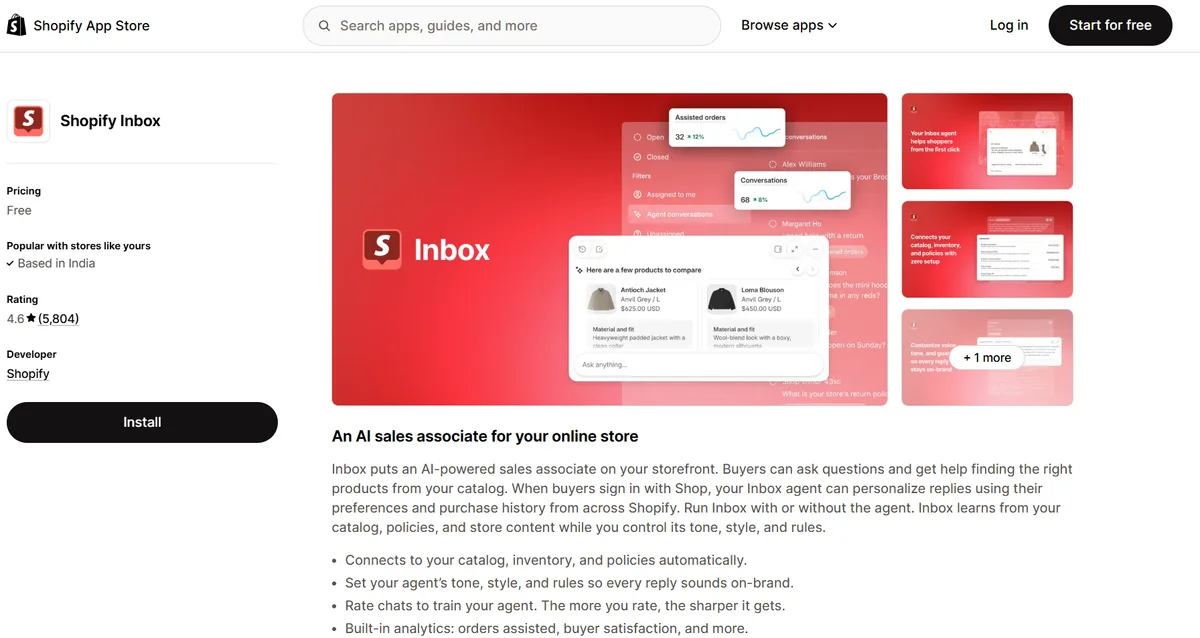
Shopify Inbox helps merchants manage customer conversations. Merchants can also respond to shoppers quickly through supported messaging channels. Quick replies can remove uncertainties during the buying process.
It is best for stores that receive frequent pre-purchase questions.
Judge.me
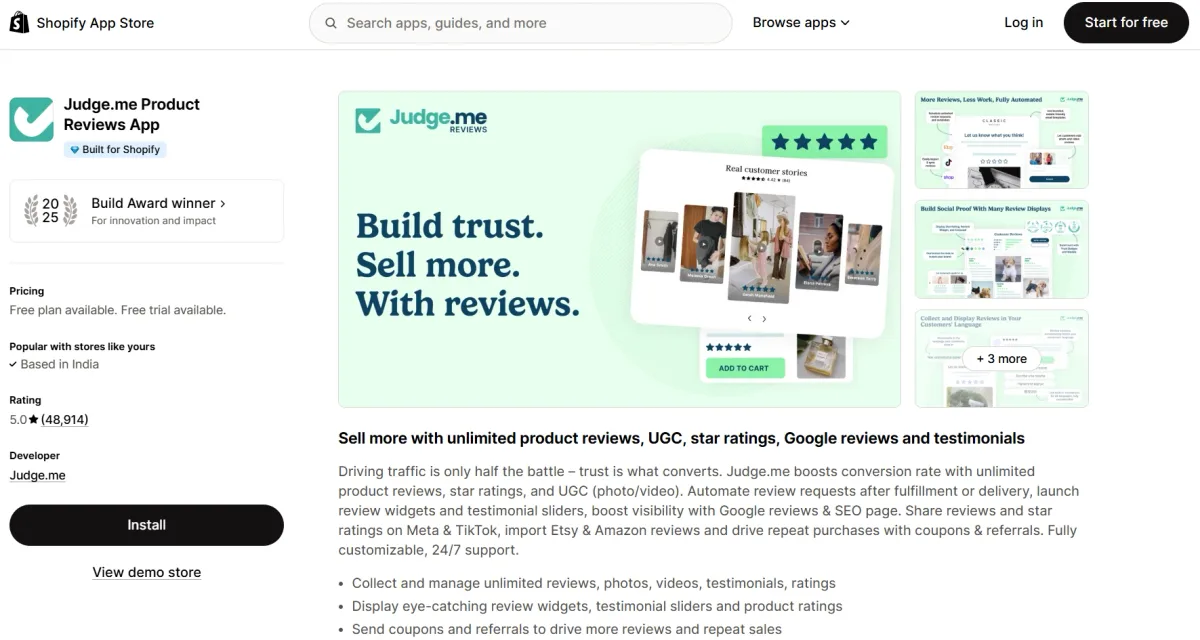
Judge.me helps merchants collect and display product reviews. It also provides support to add photo and video reviews. Social proof is a big deciding element with which shoppers can evaluate products.
It is best for stores that look to strengthen product-page credibility.
Shopify Search & Discovery
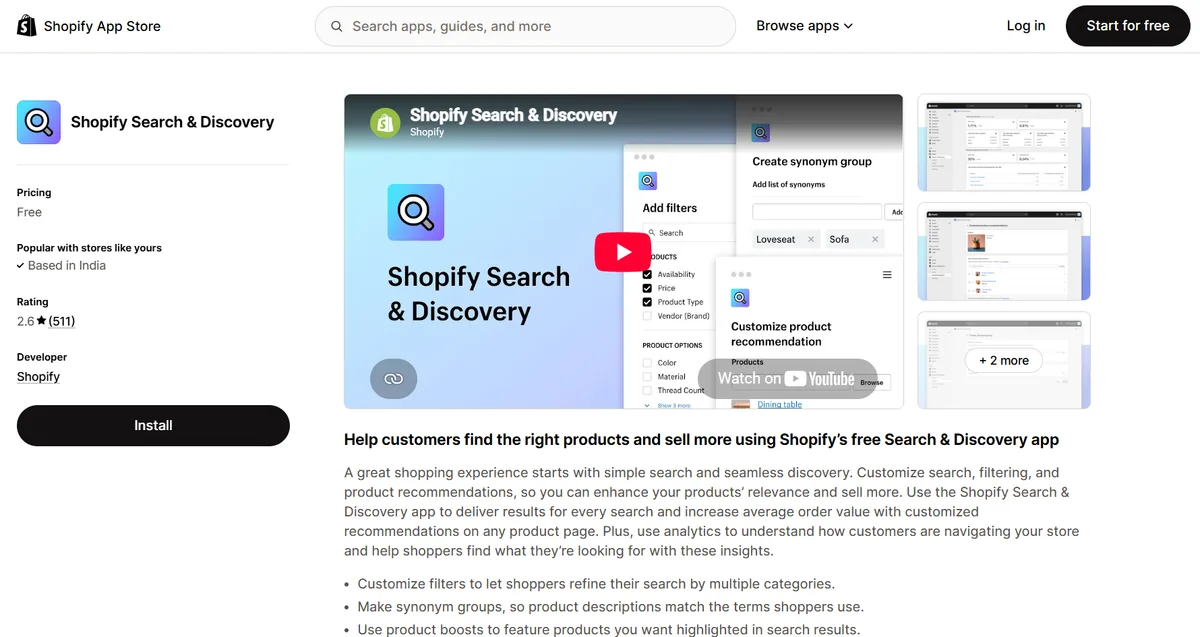
Shopify Search & Discovery helps merchants improve storefront search and product recommendations. It also helps to improve filters and related product discovery.
It is best for stores that are looking to grow their product catalogs and simplify browsing.
Klaviyo
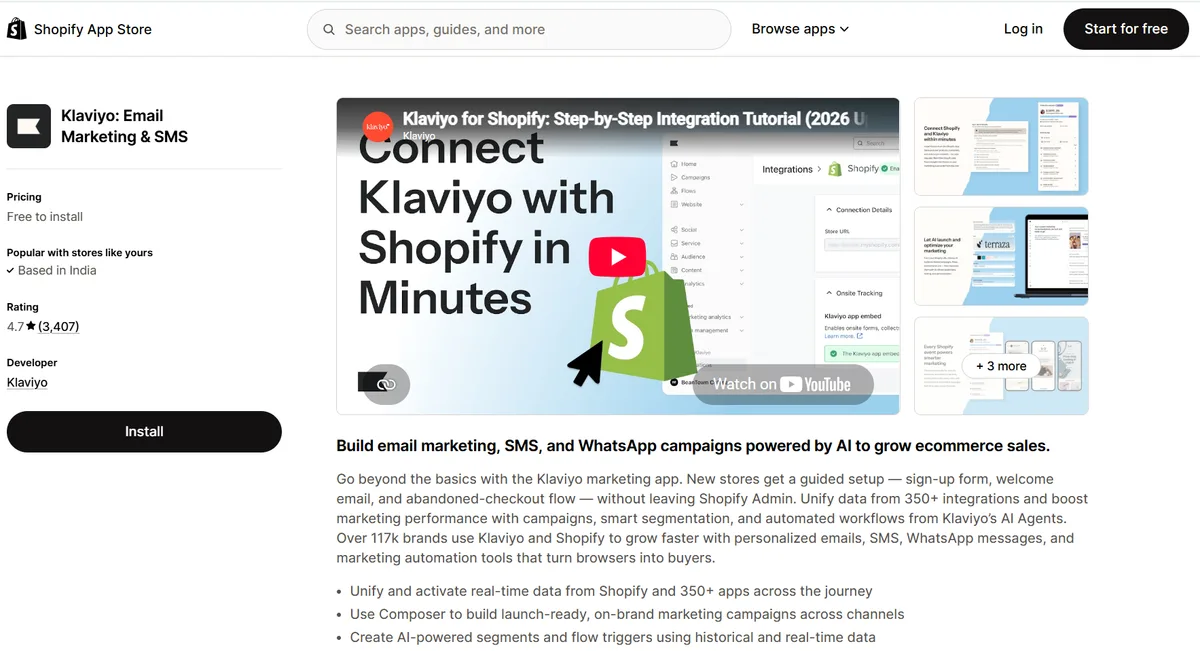
Klaviyo offers marketing automation and customer segmentation tools. Merchants use it for welcome campaigns, follow-up messages, and abandoned-cart reminders.
It is best for stores looking to recover lost orders and encourage repeat purchases.
Conclusion
Learning how to increase sales on a Shopify store starts with understanding what prevents customers from buying. Improve product pages, build trust, simplify checkout, provide flexible payment options, and increase product discoverability through SEO.
Promotions can encourage purchases when they are relevant to the shopper and financially sustainable. NexDiscount helps merchants manage discount eligibility and cap percentage-based savings. This way, merchants have greater control over promotional costs.
To understand how to generate sales on Shopify, start with the biggest conversion problem that your store faces. Implement one focused improvement, measure results, and confirm.
FAQ
Why is my Shopify not getting sales?
Your Shopify store may not be getting sales because of low traffic, poor product selection, weak product pages, high prices, or a lack of trust. Improve your SEO, product descriptions, images, offers, and checkout experience.
How to get sales on Shopify dropshipping?
Choose products with good demand, create attractive product pages, use social media and SEO to bring targeted traffic, and offer competitive pricing. Testing different products and marketing strategies can help increase sales.
What is the best way to get sales on Shopify?
The best approach is to combine SEO, social media, paid ads, email marketing, and strong product pages. Focus on the right audience and make it easy for customers to trust and buy from your store.
How to find best-selling items on Shopify?
Check Shopify product trends, competitor stores, social media trends, marketplaces, and keyword search volume. Look for products with consistent demand, good reviews, and healthy profit margins.